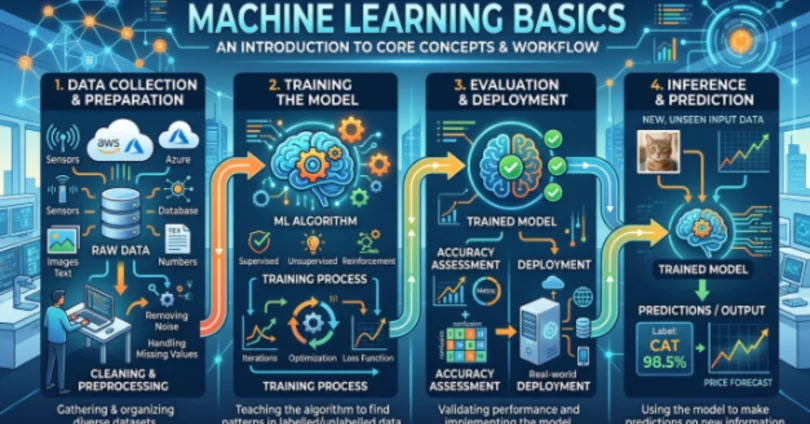
Machine Learning Basics, Are the first concepts you should learn before exploring advanced artificial intelligence topics. Machine learning helps computers learn from data, identify patterns and make decisions without being directly programmed for every task. It is used in many everyday applications, such as search engines, online shopping, video recommendations and spam email detection. By understanding the basics, beginners can build a strong foundation and make learning machine learning much easier.
Why Do We Need Machine Learning?
Machine learning helps computers learn from data and improve their performance without needing detailed programming. It makes many tasks faster, more accurate and easier by finding patterns and making smart decisions automatically.
- Automation: Reduces manual work by completing tasks automatically.
- Better Accuracy: Helps make more accurate predictions using data.
- Fast Decision Making: Processes large amounts of information quickly.
- Pattern Recognition: Finds hidden trends that people may miss.
- Personalized Experience: Recommends products, videos and music based on user preferences.
- Problem Solving: Helps solve complex problems in healthcare, finance, education and other industries.
- Continuous Improvement: Learns from new data over time to improve results.
Machine learning is an important technology that helps computers learn, make smart decisions and solve real world problems more easily.
Basic Building Blocks of Machine Learning
The basic building blocks of machine learning work together to help a model learn from data and make accurate predictions. Understanding these core elements makes it easier for beginners to learn machine learning.
- Data: The information collected to train and test a machine learning model.
- Features: The important details or characteristics in the data that help the model learn.
- Labels: The correct answers provided with training data to guide the learning process.
- Model: A system that learns patterns from data and makes predictions.
- Training: The process of teaching the model using a dataset.
- Testing: Checking how well the trained model performs on new data.
- Prediction: The final output generated by the model based on what it has learned.
These basic building blocks form the foundation of every machine learning system and help beginners understand how the learning process works.
Input, Process, and Output in Machine Learning
Machine learning follows a simple flow where data is entered, processed by a model and turned into useful results.
| Stage | Simple Meaning | Easy Example |
| Input | The data given to the machine learning model for learning or prediction. | Student exam scores, customer reviews, or house prices. |
| Process | The model analyzes the data, finds patterns and learns from the information. | The model studies past exam scores to identify performance patterns. |
| Output | The final prediction or decision produced by the trained model. | Predicting a student’s grade or whether an email is spam. |
Understanding the input, process and output flow helps beginners see how machine learning turns raw data into useful predictions.
Different Types of Data Used in Machine Learning
Different types of data help machine learning models learn and make accurate predictions for different tasks.
- Numerical Data
- Categorical Data
- Text Data
- Image Data
- Audio Data
- Video Data
- Time Series Data
Knowing the different types of data helps beginners understand what information machine learning models use to learn effectively.
Everyday Uses of Machine Learning
Machine learning is part of our daily lives, even if we do not notice it. It helps make many digital services faster, smarter and more useful.
- Search Engines: Machine learning helps search engines understand what users are looking for and shows the most relevant search results. It also improves search suggestions and corrects spelling mistakes.
- Online Shopping: Shopping websites use machine learning to recommend products based on your browsing history, previous purchases and personal interests, making it easier to find what you need.
- Video and Music Recommendations: Platforms like YouTube and music streaming apps use machine learning to suggest videos, songs and playlists based on your watching and listening habits.
- Email Spam Detection: Machine learning automatically checks incoming emails and identifies unwanted or harmful messages. It moves spam emails to a separate folder to keep your inbox clean.
- Voice Assistants: Digital assistants such as Google Assistant, Siri, and Alexa use machine learning to understand voice commands, answer questions, set reminders and perform different tasks.
These everyday examples show how machine learning makes technology smarter, saves time and improves our daily digital experience.
Things Every Beginner Should Remember
Every beginner should keep a few important points in mind to build a strong foundation in machine learning and avoid common learning mistakes.
- Start with the Basics: Learn the core concepts before moving to advanced topics.
- Practice Regularly: Small daily practice helps improve your understanding and skills.
- Use Quality Data: Good data leads to better learning and more accurate results.
- Be Patient: Machine learning takes time, so keep learning step by step.
- Learn from Mistakes: Errors are part of the learning process and help you improve.
- Focus on Understanding: Try to understand concepts instead of memorizing them.
- Keep Exploring: Stay curious and continue learning as machine learning keeps evolving.
Remembering these simple tips will help beginners learn machine learning more effectively and build confidence over time.
Common FAQs About Machine Learning Basics
Here are some FAQs of Machine Learning Basics:
Is machine learning difficult for beginners to learn?
No. Machine learning becomes easier when you start with the basic concepts and learn one topic at a time using simple examples.
Do I need strong math skills to learn machine learning basics?
No. Basic math is enough in the beginning. You can learn advanced mathematics later as you progress.
Can I learn machine learning without coding first?
Yes. You can understand the basic concepts without coding, but learning programming will help you build real machine learning applications.
How long does it take to understand machine learning basics?
With regular study and practice, most beginners can understand the basics within a few weeks.
Which industries use machine learning the most?
Machine learning is widely used in healthcare, banking, education, transportation, entertainment, agriculture and online businesses.
Is machine learning only used by large companies?
No. Small businesses, startups and individual developers also use machine learning to solve everyday problems and improve their services.
What is the biggest challenge for beginners in machine learning?
The biggest challenge is trying to learn advanced topics too early instead of building a strong understanding of the basics.
Can machine learning make mistakes?
Yes. Machine learning models can make incorrect predictions if they are trained with poor quality or limited data.
Conclusion
Machine Learning Basics provide the knowledge needed to understand how computers learn from data and make smart decisions. By learning these basic concepts first, beginners can build a strong foundation and prepare for more advanced machine learning topics with confidence. Regular practice and continuous learning are the keys to becoming successful in machine learning.